
A Parent’s Guide (0-5 Years)
Navigating the world of feeding your little one is an adventure filled with joy, and sometimes, a little bit of worry. One of the biggest concerns for many parents is the possibility of food allergies and sensitivities. Understanding the difference, recognizing the signs, and knowing how to respond can feel overwhelming, but you’re not alone! This comprehensive guide is designed to empower you with the knowledge and tools you need to confidently navigate this aspect of your child’s feeding journey.
The best way to remember is to use the ‘hypoallergenic food pyramid’ – from mild to cautious. Typically, you’d want to introduce each solids from the bottom up to test, before moving up the pyramid.

- Understanding the Difference: Allergies vs. Sensitivities
- Common Food Allergens
- Recognizing Allergic Reactions
- What to Do If You Suspect an Allergy
- Introducing Allergens: A Gradual Approach
- Food Sensitivities (Intolerances): A Different Story
- Navigating Specific Situations
- The Emotional Side of Allergies
Understanding the Difference: Allergies vs. Sensitivities
It’s easy to confuse food allergies and sensitivities, but they are fundamentally different.
- Food Allergies: These involve the immune system. When a child with a food allergy consumes the offending food, their immune system mistakenly identifies it as a threat and launches an attack. This can trigger a range of symptoms, from mild to severe, and even life-threatening.
- Food Sensitivities (or Intolerances): These do not involve the immune system. Instead, they typically involve the digestive system. A child with a food sensitivity may experience discomfort after eating a particular food, but the reaction is not an allergic one. Symptoms are usually milder and limited to digestive issues.
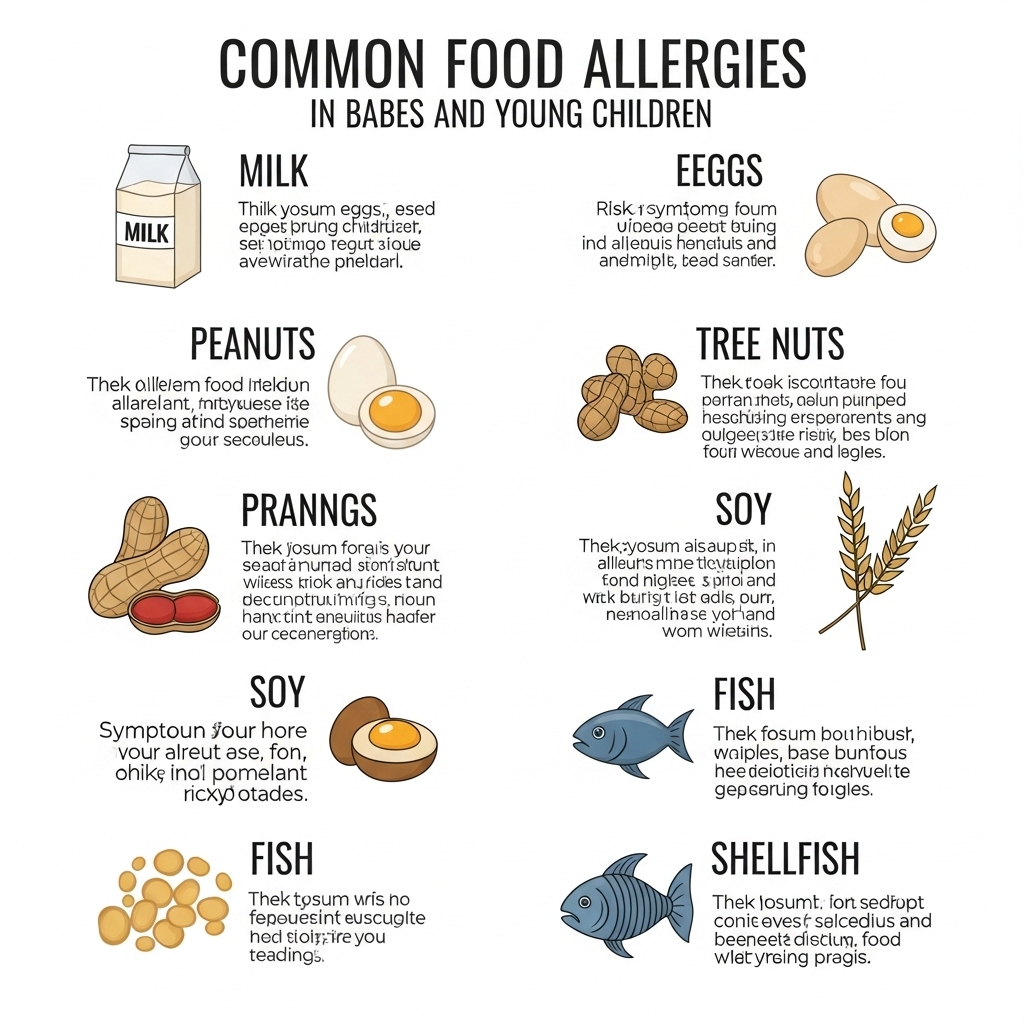
Common Food Allergens
The “Top 9” food allergens are responsible for the vast majority of allergic reactions:
- Milk
- Eggs
- Peanuts
- Tree Nuts (e.g., almonds, walnuts, cashews)
- Soy
- Wheat
- Fish
- Shellfish
- Sesame
Recognizing Allergic Reactions
Reactions can vary widely, and it’s essential to be aware of the potential signs:
- Mild Symptoms:
- Hives (itchy, raised welts)
- Rash
- Itching
- Swelling (especially of the face, lips, or tongue)
- Mild stomach upset (nausea, vomiting, diarrhea)
- Moderate Symptoms:
- Widespread hives or rash
- Increased swelling
- Abdominal pain
- Vomiting
- Diarrhea
- Coughing
- Wheezing
- Severe Symptoms (Anaphylaxis): This is a medical emergency!
- Difficulty breathing
- Wheezing
- Throat tightness
- Swelling of the tongue or throat
- Trouble swallowing
- Change in voice (hoarseness)
- Dizziness or lightheadedness
- Loss of consciousness
- Pale or bluish skin
- Rapid heartbeat
If you suspect anaphylaxis, call emergency services immediately.
What to Do If You Suspect an Allergy
- Observe Carefully: Pay close attention to your child’s symptoms after eating. Note the timing, the foods consumed, and the severity of the reaction.
- Contact Your Pediatrician: Do not attempt to diagnose or manage allergies on your own. Your pediatrician can provide guidance and, if necessary, refer you to a specialist (allergist).
- Avoid the Suspected Food: Until you have a diagnosis, it’s best to avoid the food that you suspect is causing the reaction.
- Emergency Plan: If your child has a diagnosed allergy, work with your doctor to create an emergency action plan. This should include:
- A list of the specific allergens
- Symptoms to watch for
- Instructions on how to administer medication (e.g., epinephrine auto-injector)
- Emergency contact information
- Read Labels Meticulously: Become a label-reading expert! Food labels are required to list major allergens. Be aware of hidden sources and cross-contamination risks.
- Communicate: Inform all caregivers (family, daycare, school staff) about your child’s allergies. Ensure they understand the emergency plan.
Introducing Allergens: A Gradual Approach
For many years, the advice was to delay introducing common allergens. However, current research suggests that early introduction, under the guidance of a pediatrician, may actually reduce the risk of developing allergies.
- When to Start: Discuss the timing with your pediatrician. Generally, once your baby is ready for solids (around 6 months), and has tolerated a few basic foods, you can start introducing allergens.
- One at a Time: Introduce allergens one at a time, and wait a few days before introducing another new food. This makes it easier to identify the culprit if a reaction occurs.
- Small Amounts: Start with very small amounts of the potential allergen.
- At Home: Introduce allergens at home, not at daycare or a restaurant, so you can closely monitor for reactions.
- Common Allergens First: Prioritize introducing the most common allergens (milk, eggs, peanuts, etc.).
- Continue to Offer: Once an allergen is tolerated, continue to include it in your child’s diet regularly.
Food Sensitivities (Intolerances): A Different Story
Food sensitivities, unlike allergies, do not involve the immune system. They typically affect the digestive system and cause symptoms like:
- Gas
- Bloating
- Diarrhea
- Constipation
- Stomach cramps
- Irritability
While not life-threatening, food sensitivities can be uncomfortable.
- Common Sensitivities:
- Lactose (in milk and dairy products)
- Gluten (in wheat, barley, and rye)
- Food additives
- Certain natural chemicals in foods
- Diagnosis: Food sensitivities are often diagnosed through an elimination diet, where suspected foods are removed from the diet and then reintroduced one at a time to see if symptoms return.
- Management: Management typically involves avoiding or limiting the offending food.
Navigating Specific Situations
- Breastfeeding: If you’re breastfeeding, you don’t typically need to avoid common allergens unless you are allergic to them. Breast milk can actually help protect against allergies.
- Formula Feeding: If your baby has a cow’s milk allergy, they may need a special formula. Talk to your pediatrician about appropriate options.
- Daycare and School: Communicate clearly with daycare and school staff about your child’s allergies. Provide a detailed emergency plan and ensure they know how to administer medication if necessary.
- Eating Out: When eating out, always inform the restaurant about your child’s allergies. Ask detailed questions about ingredients and preparation methods to avoid cross-contamination.
- Reading Labels: Always read food labels very carefully. Ingredients can change, and hidden allergens can be present.
The Emotional Side of Allergies
Dealing with food allergies can be emotionally challenging. It’s normal to feel anxious, overwhelmed, and even frustrated.
- Seek Support: Connect with other parents who have children with allergies. Online support groups or local allergy organizations can provide valuable resources and a sense of community.
- Educate Yourself: The more you understand about allergies, the more confident you’ll feel in managing them.
- Focus on What You Can Control: You can’t control whether your child has allergies, but you can control how you manage them. Focus on creating a safe and supportive environment.
- Celebrate Victories: Every safe meal, every successful outing, is a victory! Acknowledge and celebrate these milestones.
Credible Sources for Information and Support
- Food Allergy Research & Education (FARE): A leading organization providing education, resources, and advocacy for food allergy awareness and management.
- National Institute of Allergy and Infectious Diseases (NIAID): Part of the National Institutes of Health, providing research and guidelines on allergies.
- American Academy of Pediatrics (AAP): Offers guidance on children’s health, including food allergies.
A Final Note of Encouragement
Navigating food allergies and sensitivities is a marathon, not a sprint. There will be challenges, but with knowledge, preparation, and a strong support system, you can create a safe and fulfilling life for your child.
Remember to trust your instincts, advocate for your child’s needs, and celebrate every step of the journey. You’ve got this!
Related Articles:
- Growth & Milestones: Tracking physical, cognitive, social, and emotional development; celebrating firsts.
- Feeding & Nutrition: Breastfeeding, formula feeding, introducing solids, picky eating strategies, healthy snacks.
- Sleep Solutions: Napping guides, bedtime routines, common sleep challenges (sleep regressions, waking up too early).
- Play & Learning: Age-appropriate activities, sensory play, DIY toys, fostering creativity and curiosity.
- Behavior & Discipline: Managing tantrums, setting gentle boundaries, positive reinforcement, sibling dynamics in early years.
- Emotional Development: Guide them in developing strong social skills, emotional intelligence, and the ability to bounce back from challenges.
- Early Years Resource Guide: Find trusted resources, developmental trackers, and valuable parenting books to navigate these crucial years.